best time of day for thermal imaging a house
Direct timing answer
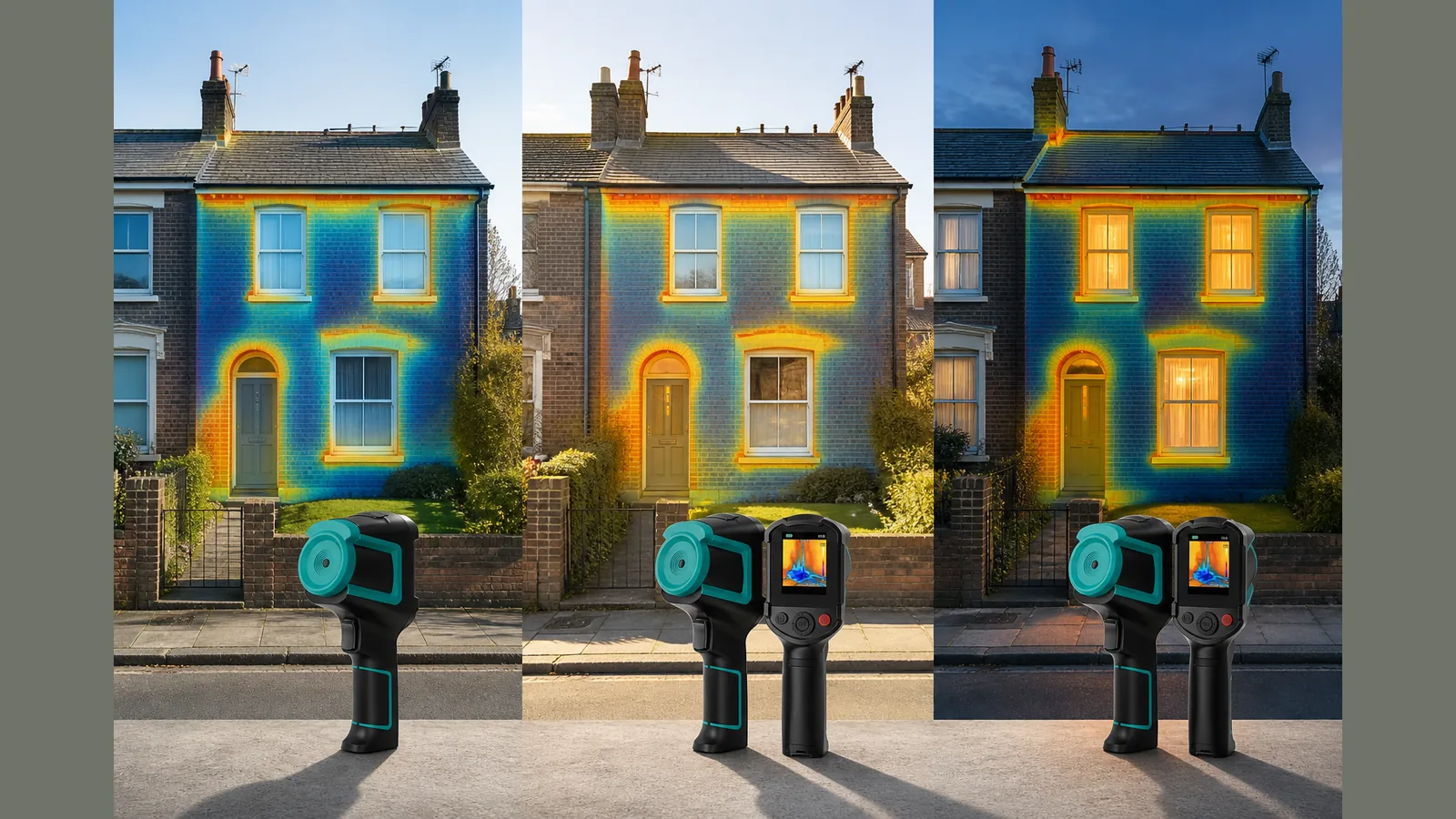
The best time of day for thermal imaging a house in the UK is usually early morning or after dusk on a cold, calm day, when there is a clear indoor–outdoor temperature difference and little sun on the walls. Local council guidance notes that a colder outdoor temperature can improve home-survey results, and that a substantial temperature difference helps thermal images show useful contrast.
Why temperature difference matters
A handheld infrared thermal imager shows surface temperature patterns, not a finished diagnosis. When the indoors is warmer than the outdoors, heat escaping through draughts, thin insulation or poorly sealed openings can appear as colder or warmer patches on exterior and interior surfaces. East Cambridgeshire’s Thermal Camera Loan Scheme explains that thermal cameras can reveal draughts, insulation gaps and heating problems, and that colder outdoor conditions tend to improve survey results. South Cambridgeshire’s guidance on thermal imaging cameras similarly advises aiming for a substantial indoor–outdoor temperature difference and learning how to interpret the images.
Treat what you see as screening clues. Bracknell Forest’s advice on how to borrow a thermal imaging camera notes that thermal imaging can help identify cold spots and insulation gaps, but the findings need appropriate follow-up—such as checking seals, reviewing insulation, or seeking a qualified assessment—rather than treating a colour pattern as proof of damp, wiring faults, insulation failure or regulatory compliance.
Morning, evening and sun exposure
Morning surveys before sunrise, or evening surveys after the sun has left the façades, reduce solar heating that can mask true heat-loss patterns. South- and west-facing walls warmed by daytime sun may look uneven for hours after exposure, even when the fabric is performing normally. If you must scan during daylight, favour shaded elevations and allow recently sunlit surfaces time to settle before you draw conclusions.
- Prefer pre-dawn or post-dusk windows on cold days.
- Avoid scanning walls that have been in strong sun.
- Keep heating patterns stable for several hours beforehand so the building is not still warming up or cooling down unpredictably.
Wind and rain checklist
Weather affects both the building surface and how clearly patterns appear. Use this practical checklist before you start:
- Wind: Strong wind can strip heat from surfaces and blur contrast; choose a calm spell where possible.
- Rain and wet façades: Wet masonry and render change surface temperatures; wait until walls are dry.
- Fog and heavy cloud: These are less critical than rain or sun, but still plan for a clear indoor–outdoor difference.
- Indoor stability: Avoid opening many windows or changing thermostat set-points just before the scan.
Seasonal planning table
UK seasons change how easy it is to get a useful temperature difference. The table below is planning guidance only, not a performance claim for any device.
| Season | Typical planning note | Practical tip |
|---|---|---|
| Winter | Often the easiest period for a strong indoor–outdoor difference | Favour cold, dry, calm mornings or evenings |
| Spring / autumn | Useful on cooler days and clear nights | Watch for sunny afternoons that warm façades |
| Summer | Harder to create contrast unless nights are cool and the home is conditioned | Prioritise pre-dawn scans; postpone if walls are sun-warmed |
When to postpone
Postpone the survey if rain is wetting the elevations, if strong sun has been on the walls you need to inspect, if wind is high, or if you cannot keep a meaningful indoor–outdoor temperature difference. Also wait if the heating has only just been switched on or off, or if you lack time to review images carefully and arrange suitable follow-up for anything that looks unusual.
Next step
If you are preparing a careful home heat-loss scan and want a compact handheld option, see the MILESEEY TR10 handheld infrared thermal imager product details. The TR10 is a handheld infrared thermal imager with public-safe outline dimensions of 224 × 91 × 76 mm, and purchases through this shop are covered by a 12-month warranty term. Full coverage rules beyond that term length are not restated here.
FAQ
Is night always better than daytime?
Not always, but after dusk (or before dawn) you usually avoid sun-warmed walls. A cold, calm night with a clear indoor–outdoor difference is often more informative than a bright afternoon.
How large should the indoor–outdoor difference be?
Public guidance from South Cambridgeshire stresses a substantial difference rather than a single universal figure. Aim for conditions where contrast is obvious, and get training or reliable guidance before you interpret images.
Can thermal images prove damp or failed insulation?
No. Patterns are screening clues. Cold spots and uneven areas may suggest where to look next, but they are not proof of damp, wiring defects, insulation failure or compliance on their own.
What should I check on the TR10 page before buying?
Review the current TR10 product details for the handheld infrared thermal imager category, model identity, and the 12-month warranty statement. Do not rely on unverified claims about temperature range, accuracy, resolution, frame rate, battery life, storage or alarms unless those are confirmed on the product page with supporting documentation.